
Dryer Vent Cleaning in Cupertino, CA
Call (408) 878-4182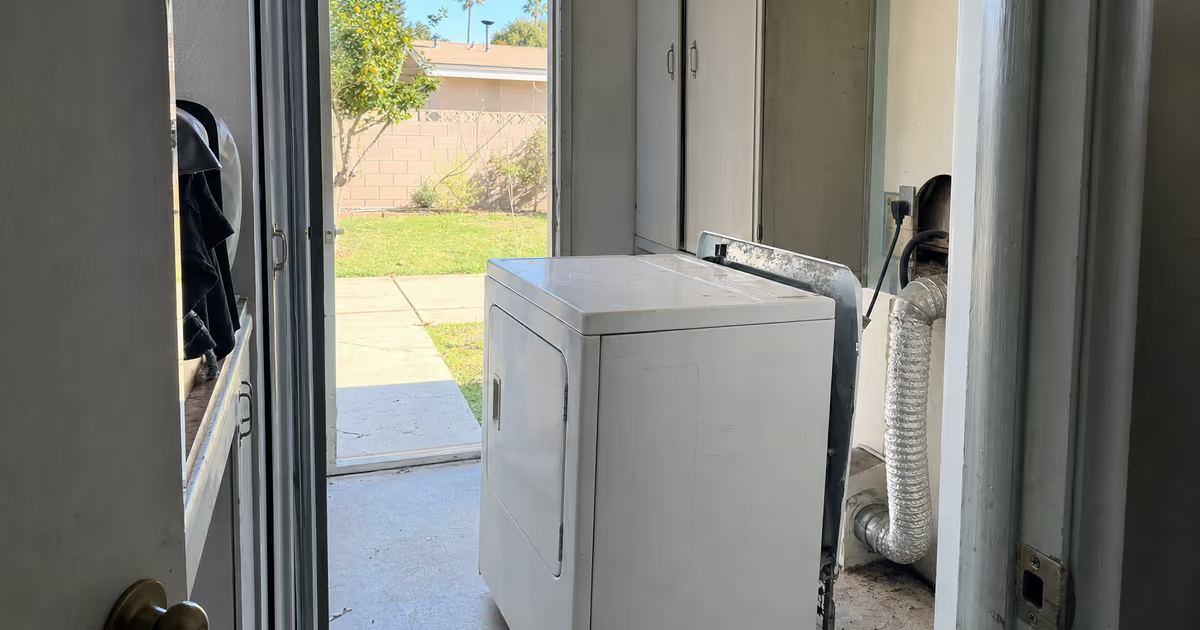
Why dryer vents clog differently in Cupertino
Lint alone rarely closes a vent here. Pollen does half the work. Foothill-edge homes near Regnart and Inspiration Heights pull spring grass and oak pollen indoors, plus dry-season dust carried on the westerly afternoon breeze. That grit binds to warm damp lint at the cap. It sets like felt. Wooded lots add leaf litter and spider webbing right at the wall hood, which pins the flap half open.
Housing stock splits three ways. Former orchard land was built out mostly 1955-1975 as single-story ranch tracts on slab. Laundry sits in the garage or an interior hallway closet, so wall runs are short to medium and usually easy. The foothill two-stories from the 1970s through the 1990s are the hard ones. Laundry sits upstairs, attic runs are long, and the roof jack is not visible from the ground.
Condos and townhomes along Stevens Creek Boulevard and De Anza use interior stacked laundry closets. Tight elbows, little slack, and building access rules that shape how the work gets done.
Owner-occupancy is high and many households are multigenerational. Weekly load counts run heavy, so buildup returns faster than the generic annual advice suggests. Check it yourself: run a cycle, then feel the outside cap for strong warm flow.
What happens after you call
- 1
Call and tell us your dryer brand, where the vent exits, and how long a load takes now. We book a 90 minute arrival window and text you when the van is 20 minutes out.
- 2
We look at the run first, from the machine to the outside hood, then hand you the price in writing. If the duct is crushed or needs a booster fan, you hear that number before we start.
- 3
We pull the lint, brush the full run, reconnect the hose with a clamp instead of tape, then run a load and check the airflow at the hood while you watch. The laundry area gets vacuumed.
Frequently Asked Questions
- My laundry is upstairs and the vent goes up through the attic to the roof. Is that harder to clean than a garage dryer?
Yes, and it's the setup we see most often in the Regnart and Inspiration Heights two-story homes built from the 1970s onward. Those runs travel a long way through the attic before turning up to a roof jack, and lint settles in the horizontal stretch and at the elbows rather than blowing clear. We clean from the laundry end with a rotating brush on flexible rods and, where the roof is safely walkable, pull from the termination as well so the last few feet don't just get pushed back. Long attic runs also tend to have joints that separate over time, so we check the connections we can reach while we're in there. The older single-story ranch homes with laundry in the garage are usually a much shorter, more direct run and go quicker.
- What actually fails on Cupertino dryer vents?
Three things, mostly by neighborhood type. On the foothill-edge lots, the exterior wall cap collects oak pollen and grass seed in spring and dry-season dust the rest of the year, all of it pulled toward the house by the westerly afternoon breeze. The flapper ends up gummed or propped open. On wooded lots we pull leaf litter and spider webbing out of the cap almost every visit, and screened caps clog fast. In the two-story foothill homes, it's attic run problems: sagging flex duct, a joint that's pulled apart and is dumping lint into the attic, or a roof jack screen that shouldn't be there. In the ranch tracts, the short wall run itself is usually fine, but the transition hose behind the dryer gets crushed against the wall in a tight garage or hallway closet.
- We're a multigenerational household running the dryer most days. How often should we clean?
More often than the general once-a-year advice. That guidance assumes a light load count, and a lot of Cupertino houses aren't running light. High owner-occupancy here means families stay put, and several adults under one roof adds up to daily or near-daily loads. If that's your situation, plan on annually at minimum and don't be surprised if you'd benefit from a shorter interval, especially with a long attic run where lint has more surface to cling to. The honest test is drying time: if a normal load now needs a second cycle, the vent is telling you something regardless of when it was last done.
- What makes one Cupertino job cost more than another?
Length and access. A single-story ranch with the dryer in the garage and a short run straight out through the wall is the simplest job we do here and prices accordingly. An upstairs laundry with a long attic run to a roof jack takes longer, sometimes needs roof access, and may involve reconnecting or resealing joints we find pulled apart. That's more work and it costs more. Condos and townhomes along Stevens Creek and De Anza with interior stacked laundry closets sit in between: the run is often short but the machines are stacked and tight to the wall, so pulling the unit and getting behind it adds time. We'll ask where the dryer sits and where it vents before quoting, because in this city those two answers decide almost everything.
Nearby areas we also serve
In addition to Cupertino, we cover Milpitas, San Jose, Fremont, Sunnyvale, Santa Clara, Mountain View.
Dryer Vent Cleaning services in Cupertino
Need dryer vent cleaning in Cupertino?
Call for same-day service. We give you an honest arrival window and the price before we start.
Call (408) 878-4182